Conductive PVC Technical Guide
Conductive PVC Film RFQ Checklist: Technical Inputs for a Meaningful Quotation
The technical, test, assembly and logistics information required to quote conductive PVC film without relying on unsupported generic claims.
Published: September 30, 2026 · Author: Technical Editorial Team
Article summary
The technical, test, assembly and logistics information required to quote conductive PVC film without relying on unsupported generic claims.
Technical content
Conductive PVC Film RFQ Checklist: Information Needed for a Meaningful Technical Quotation
A conductive PVC film quotation should identify more than thickness and quantity. The electrical function, test method and assembly details determine whether a supplier can quote the right construction and whether the buyer can verify it after delivery.
Essential input list
| RFQ field | What to provide | Why it is needed |
|---|---|---|
| Product construction | Single-sided conductive or double-layer conductive/insulating; identify the active face | Prevents a visually similar but functionally wrong variant. |
| Thickness and dimensions | Nominal thickness, cut size, roll or sheet format and tolerances | Connects mechanical handling and yield to the quotation. |
| Electrical target | Surface resistance or resistivity target, unit and allowable range | Avoids an undefined “conductive” requirement. |
| Test method | Standard and edition, electrode geometry, voltage, time, conditioning, sample plan and report format | A number without conditions may not be reproducible. |
| Assembly | Counterpart materials, contact geometry, joining, bending, holes and edge treatment | Determines whether the material can function in the final assembly. |
| Environment | Temperature, humidity, UV exposure, chemicals, contamination and lifetime expectation | Determines which qualification work is required. |
| Compliance/documentation | Required declarations, lot traceability, certificates, TDS, SDS or test reports | Clarifies deliverables before commercial negotiation. |
| Logistics | Quantity, packaging, destination, incoterm and requested delivery date | Allows a usable commercial and loading plan. |
Do not ask for unsupported guarantees
Avoid a general request such as “high conductivity, chemical resistant and long life” without defining the test and service conditions. A supplier cannot make that request technically meaningful without the medium, temperature, time, configuration and acceptance rule. Likewise, do not infer food-contact, medical, fire, waterproofing, EMI/EMC or safety performance from a surface-resistance result.
Sample approval before volume purchase
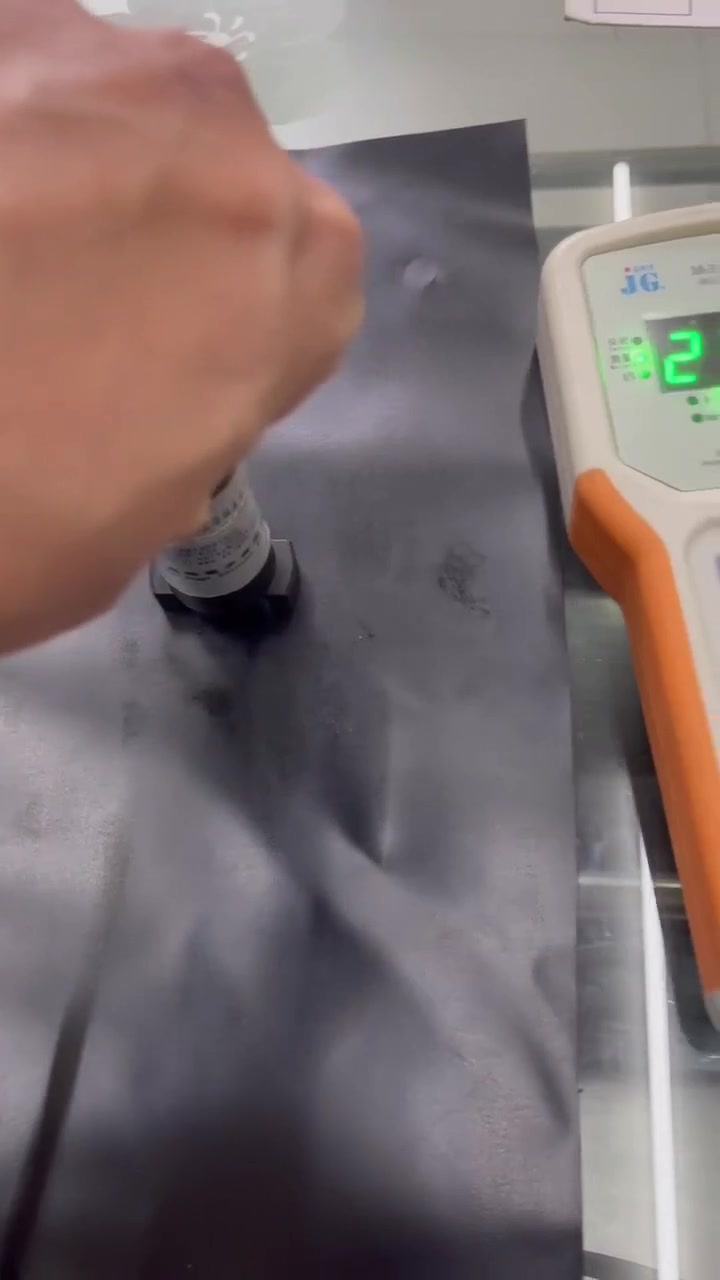
For a new assembly, request representative samples in the intended thickness and construction. Run the agreed electrical and mechanical checks using the intended counterpart geometry. Approve a controlled sample and report format before specifying lot acceptance. The supplier test video may help illustrate a measurement activity, but it does not replace this approval step.
How to use the site product pages
The product pages provide the supplier workbook values, technical-document links and supplier-provided test media. Use them to define a starting RFQ, then add the project-specific conditions above. The contact form can capture application, thickness, quantity, destination and delivery timing; include the remaining electrical requirements in the message or attached specification.
References
- [GB 12952-2011 — Polyvinyl chloride plastic sheets for waterproofing](https://www.chinesestandard.net/PDF.aspx/GB12952-2011). This is a PVC waterproofing-sheet standard; it is not a certification claim for every conductive film configuration.
- [GB/T 1410-2006 — Methods of test for volume resistivity and surface resistivity of solid electrical insulating materials](https://www.chinesestandard.net/PDF.aspx/GBT1410-2006). The referenced publication notes that it has been replaced by GB/T 31838.2-2019; use the contractual project edition and the complete method when testing.
- [ASTM D257-14(2021)e1 — DC Resistance or Conductance of Insulating Materials](https://www.astm.org/d0257-14r21e01.html). The ASTM scope notes that the method is not suitable for moderately conductive materials; suitability must be confirmed for the selected material and target range.