Conductive PVC Technical Guide
Conductive PVC Film Test Report Review: What Buyers Should Verify
A buyer checklist for reviewing conductive PVC film TDS data, surface-resistance test records, batch traceability and project acceptance evidence.
Published: September 30, 2026 · Author: Technical Editorial Team
Article summary
A buyer checklist for reviewing conductive PVC film TDS data, surface-resistance test records, batch traceability and project acceptance evidence.
Technical content
Conductive PVC Film Test Report Review: A Buyer Checklist for Technical Data and Acceptance
A technical data sheet states the supplier’s reported information for a product variant. It does not by itself prove that a delivered lot meets a project-specific requirement. Buyers can reduce ambiguity by separating the document review, the product qualification and the incoming acceptance test.
1. Verify the product identity
Check the product name, construction, nominal thickness, color, conductive surface, batch or lot, date and revision. A single-sided 0.75 mm film is not interchangeable with a double-layer 1.0 mm film merely because both are black PVC and both have a surface-resistance entry.
2. Verify what was actually measured
The supplier workbook names GB/T 1410 for surface resistance. Ask for the procedure used, including the electrode configuration, DC voltage, electrification time, conditioning, temperature, humidity, number of readings and how the reported value was calculated. Where a standard edition is specified by contract, identify whether the cited edition is current or whether the contract requires a superseded edition.
3. Separate material data from application claims
The supplied notes mention electronic surface connections, signal lines, waveguides and related equipment. Those statements describe potential use contexts. They do not demonstrate EMC performance, grounding effectiveness, dielectric strength, food-contact suitability, medical suitability, fire performance, waterproofing performance or chemical compatibility in a particular project.
| Review item | Acceptable evidence | Incomplete evidence |
|---|---|---|
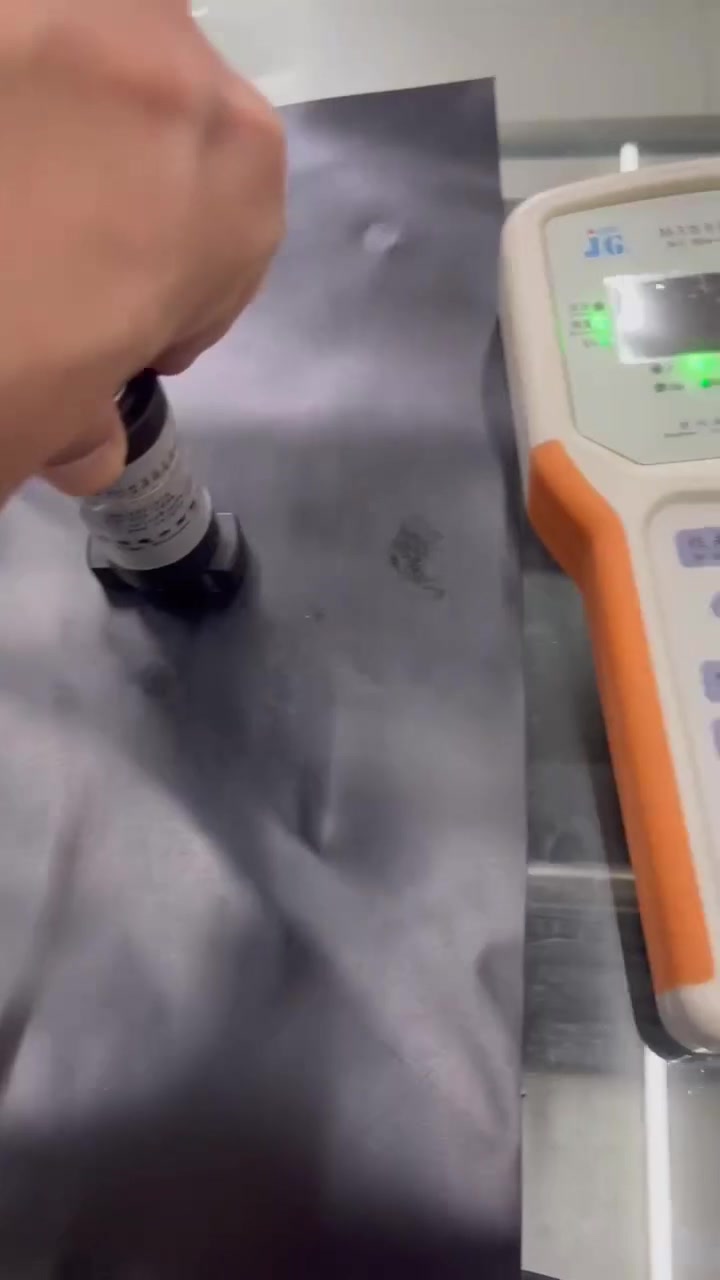
| Surface resistance | Test record with units, method, electrodes, voltage, time, environment, samples and acceptance rule | A photograph of an instrument display without the procedure. |
| Thickness | Recorded measurements, locations, method and product identity | A nominal thickness only. |
| Mechanical properties | Test report tied to construction, specimen direction and test method | A value copied from another construction or thickness. |
| Application suitability | Project-specific qualification, drawing review and relevant exposure data | A generic marketing description. |
| Lot acceptance | Traceable certificate or incoming-inspection report tied to the delivered batch | A historical brochure. |
4. Build the purchase specification before the order
Include a controlled product name, thickness, dimensions, construction, color, target surface-resistance range and unit, test method/edition, sampling plan, inspection location, records required, packaging, delivery point and nonconformance process. If the project needs a test not covered by the supplied data, add it explicitly instead of assuming it is included.
5. Preserve the evidence trail
Keep the approved TDS, purchase specification, drawing, sample-approval record, lot certificate, incoming-inspection data and any deviation approvals together. This makes later troubleshooting possible and prevents confusion when a similar-looking PVC film is substituted.
References
- [GB 12952-2011 — Polyvinyl chloride plastic sheets for waterproofing](https://www.chinesestandard.net/PDF.aspx/GB12952-2011). This is a PVC waterproofing-sheet standard; it is not a certification claim for every conductive film configuration.
- [GB/T 1410-2006 — Methods of test for volume resistivity and surface resistivity of solid electrical insulating materials](https://www.chinesestandard.net/PDF.aspx/GBT1410-2006). The referenced publication notes that it has been replaced by GB/T 31838.2-2019; use the contractual project edition and the complete method when testing.
- [ASTM D257-14(2021)e1 — DC Resistance or Conductance of Insulating Materials](https://www.astm.org/d0257-14r21e01.html). The ASTM scope notes that the method is not suitable for moderately conductive materials; suitability must be confirmed for the selected material and target range.